What the DS1813-10+ is and where it fits
The Maxim Integrated DS1813-10+ is a single-channel voltage supervisor from the EconoReset family. It monitors a 5V rail and asserts a reset signal when the supply drops below 4.35V, holding reset for a minimum of 100ms after the rail recovers. The active-low, open-drain output can be pulled up to any voltage up to the absolute maximum, making it compatible with 3.3V or 5V logic without a level shifter. Typical applications include microcontroller reset generation, power-up sequencing, and brownout detection in industrial controls, telecom equipment, and embedded systems where a simple, reliable supervisor is needed.
4.35V threshold — what it means for a 5V rail
The 4.35V threshold is set to detect a brownout on a nominal 5V supply before the downstream logic starts misbehaving. For a 5V ±5% rail, the threshold sits below the 4.75V minimum, so normal tolerance won't trigger a false reset. But if the supply sags to 4.35V or lower, the DS1813-10+ pulls the reset line low and holds it for at least 100ms after the rail returns above the threshold. This gives the oscillator and core logic time to stabilise before the processor starts executing code.
Open-drain output and active-low reset
The open-drain output means the DS1813-10+ can only pull the reset line low; it cannot drive it high. An external pull-up resistor to the desired logic voltage (typically 3.3V or 5V) is required. This topology allows multiple open-drain outputs to be wire-ORed on the same reset line, which is useful when several supervisors or watchdog timers share a common reset. The active-low convention matches the reset input of most MCUs and MPUs.
Package and temperature grade
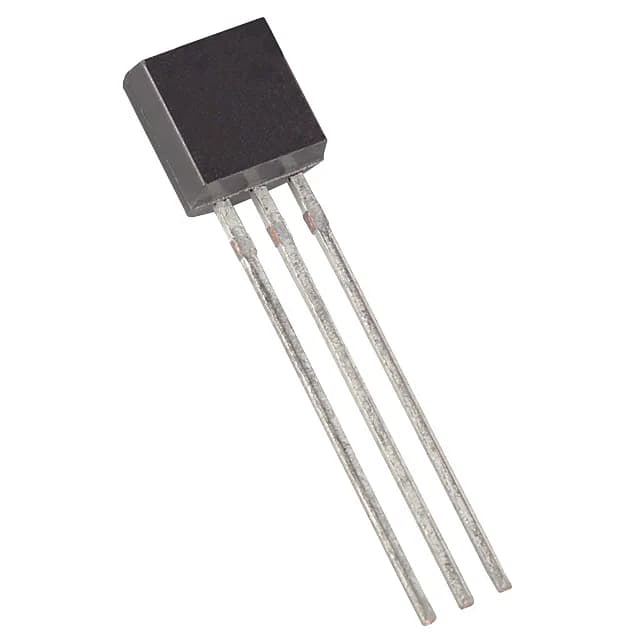
Housed in a TO-92-3 through-hole package, the DS1813-10+ is suited for prototyping, low-volume production, or designs where hand-assembly is preferred. The industrial temperature range of -40°C to 85°C covers most indoor and outdoor equipment, including motor drives, base stations, and HVAC controllers. The through-hole package also simplifies rework and field replacement compared to surface-mount alternatives.
Lifecycle and sourcing
There is no last-time-buy risk at this time. For BOM planning, this part can be specified into new designs with confidence.