What the DS1685S-3+ is and where it fits
The Maxim Integrated DS1685S-3+ is a parallel-interface real-time clock (RTC) that keeps calendar and time data in YY-MM-DD-dd and HH:MM:SS (12/24 hr) formats. It integrates 242 bytes of nonvolatile SRAM (NVSRAM) for user data that survives a main power loss, plus an alarm comparator and a programmable square-wave output. The part operates from a 2.7V to 3.7V main supply and draws a maximum of 2mA during timekeeping at 3V; a separate battery supply pin (2.5V to 3.7V) maintains the clock and NVSRAM when the main rail drops. The 0°C to 70°C temperature grade suits commercial equipment — office peripherals, point-of-sale terminals, embedded controllers, and instrumentation panels that need a battery-backed timestamp and small data store.
Parallel interface and memory — what 242B NVSRAM means for the BOM
The parallel bus gives deterministic read/write timing for a host microcontroller that already has a parallel memory controller or GPIO bank. The 242-byte NVSRAM is not a general-purpose replacement for a serial EEPROM — it is sized for calibration constants, last-logged event timestamps, or configuration bytes that must be retained across power cycles without a separate nonvolatile memory IC. If your firmware needs more than 242 bytes of battery-backed storage, you either add an external serial SRAM or step to a larger RTC in the same family.
Alarm, square-wave output, and Y2K compliance
The alarm output can trigger a time-of-day event without polling the clock registers. The square-wave output provides a hardware tick at a programmable frequency. Y2K compliance means the century rollover is handled internally.
Package and assembly
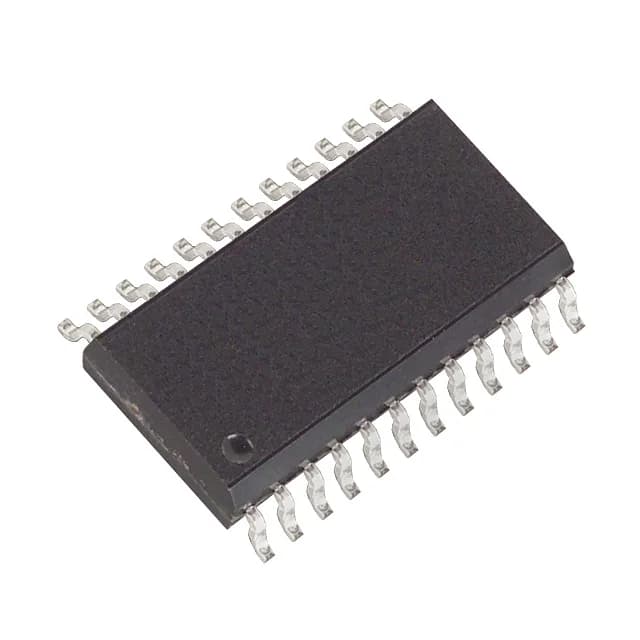
The 24-SOIC wide-body (0.295" body width, 7.50 mm) is a standard surface-mount footprint shared by many RTCs and parallel-interface peripherals. The tube shipping medium is typical for prototype and low-volume builds; for reel quantities, verify the distributor's packaging options at quote time.