Elapsed time counter with I2C — what it logs and where it fits
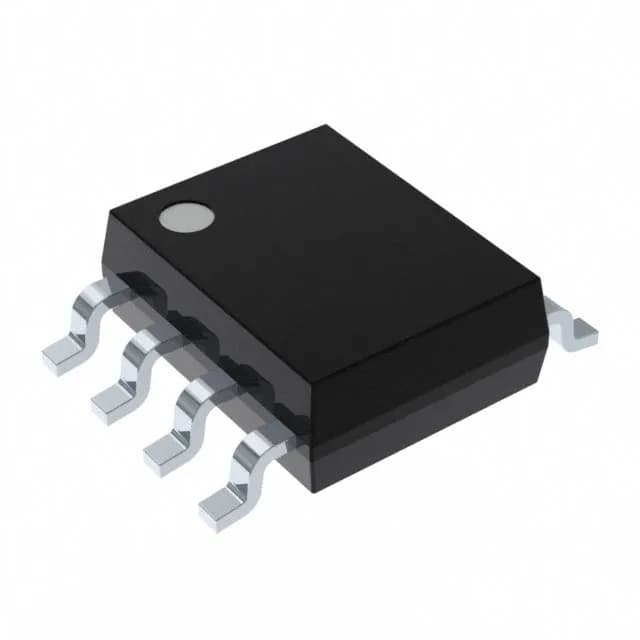
The Maxim Integrated DS1682S+T&R is an elapsed time counter (ETC) that tracks cumulative on-time or event duration in binary format, readable over an I2C 2-wire serial interface. It packs 10 bytes of EEPROM for storing calibration constants or serialization data alongside the elapsed-time register, plus an alarm output that can flag when a preset threshold is reached. The supply range spans 2.5V to 5.5V, and the timekeeping current draws 4µA to 15µA at 3V to 5.5V, making it suitable for battery-backed or always-on applications. The industrial temperature grade (-40°C to 85°C) qualifies it for outdoor telecom cabinets, industrial controllers, and automotive cabin modules where an MCU's internal RTC may lack nonvolatile elapsed-time storage or the design needs a dedicated wear-metering IC.
10 bytes of EEPROM — enough for a calibration tag, not a data log
The 10-byte memory is split between the elapsed-time counter and user EEPROM. That is enough to store a single 32-bit elapsed-time value plus a few bytes for a calibration offset, serial number, or configuration flag. It is not a general-purpose data logger — the memory size (10B) means the designer should plan for external storage if the application needs to timestamp multiple events or log a history. The EEPROM is nonvolatile, so the elapsed count survives power loss without a backup battery, which simplifies the BOM compared to a standard RTC that needs a coin cell to retain time during power-off.
Active production — no LTB clock ticking
There is no last-time-buy notice or obsolescence risk for new designs. The part is ROHS3 compliant, so it meets the latest EU restriction directives without a waiver.