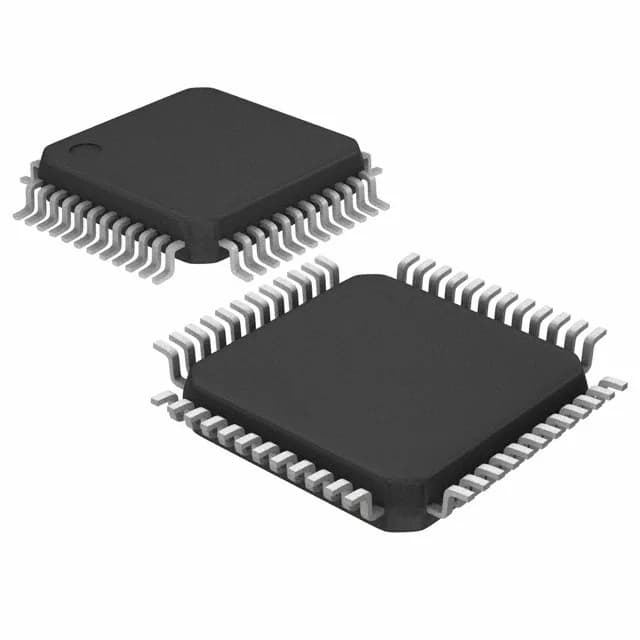
What this RTC brings to a timekeeping design
The Maxim Integrated DS1558W+ is a parallel-interface real-time clock/calendar in a 48-LQFP package, handling YY-MM-DD-dd date and HH:MM:SS 24-hour time formats. It runs from a 2.97 V to 3.63 V main supply and draws 2 mA max in timekeeping mode at 3.3 V. On-chip features include a programmable alarm, a watchdog timer, leap-year compensation, and Y2K compliance. The industrial temperature range (-40°C to 85°C) suits it for outdoor telecom, industrial controllers, and panel-mounted equipment where the RTC must keep time through a cold start.
Active production — no LTB clock ticking
No last-time-buy notice or end-of-life bulletin applies. For a BOM line that needs a stable RTC through multiple build cycles, this part does not carry an obsolescence clock — you are not hunting date-code windows or broker lots.
The 2 mA timekeeping current — what it means for battery life
At 2 mA max from a 3.3 V rail, the DS1558W+ sits in the moderate-draw range for a parallel RTC. If the design relies on a coin cell during main-power loss, that 2 mA figure sets the battery-capacity budget.
Parallel interface — why it matters
The parallel interface means the RTC connects directly to a microprocessor bus without serial-protocol overhead — useful in legacy controller designs where the MCU already has a parallel memory interface. The trade-off is more I/O pins consumed versus an I²C or SPI RTC.