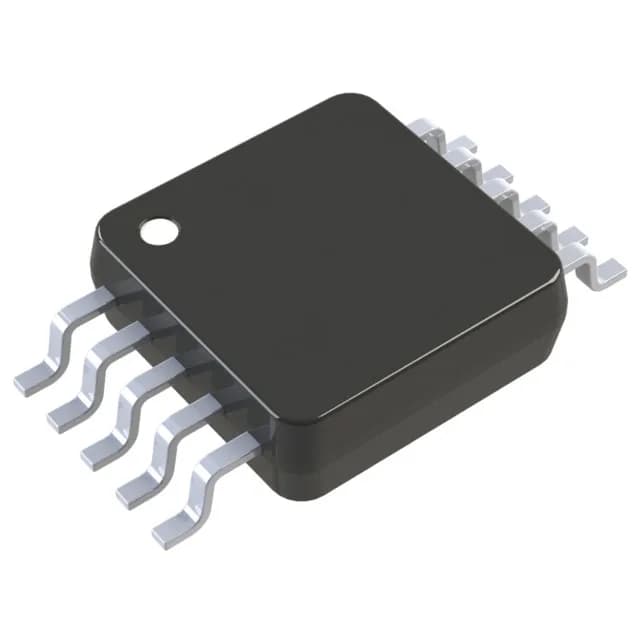
83.75 ns total delay — what it means for your timing budget
The 83.75 ns window covers one full delay sweep across all 256 taps. The first tap sits at 20 ns from the input; each subsequent tap adds 250 ps. That 20 ns minimum delay is the propagation through the input buffer and first tap — you cannot get below it. If your application needs a delay shorter than 20 ns, this part won't work; look at a lower-range delay line. For anything between 20 ns and 83.75 ns, the 250 ps step lets you land within a quarter-nanosecond of your target.
Active lifecycle, ROHS3 — no obsolescence risk for new builds
There is no last-time-buy notice, no NRND flag. You can qualify it into a new BOM without worrying about a sudden EOL.
Programming and interface — no external timing components
This is a single independent delay line; you program the tap selection via a serial interface. No external RC network or crystal is needed.