What the DS1090U-1+T does in the timing chain
The Maxim Integrated DS1090U-1+T is a single-circuit clock generator from the EconOscillator™ family. It takes a clock input and outputs a CMOS or TTL-level clock at up to 8 MHz, with a 1:1 input-to-output ratio and no internal PLL. The wide supply range of 3V to 5.5V lets it run from either a 3.3V or 5V rail without a separate regulator, which simplifies power distribution on mixed-voltage boards. The industrial temperature grade of -40°C to 85°C qualifies it for factory-floor controls, outdoor telecom cabinets, and motor-drive enclosures where the ambient can swing.
8 MHz ceiling and supply flexibility
The 8 MHz maximum frequency is the hard ceiling for this part — if your bus or processor needs a faster reference clock, this is not the generator. For designs that run at 8 MHz or below, the DS1090U-1+T delivers a clean CMOS or TTL output without the jitter and lock-time overhead of a PLL-based part. The 3V to 5.5V supply range means the same BOM line works across 3.3V and 5V systems; just confirm the input clock amplitude meets the logic threshold at your chosen rail. The divider/multiplier is yes/no — it divides but does not multiply, so the output frequency is always the input frequency divided by an internal factor, not a multiplied-up version.
Package and footprint for the layout
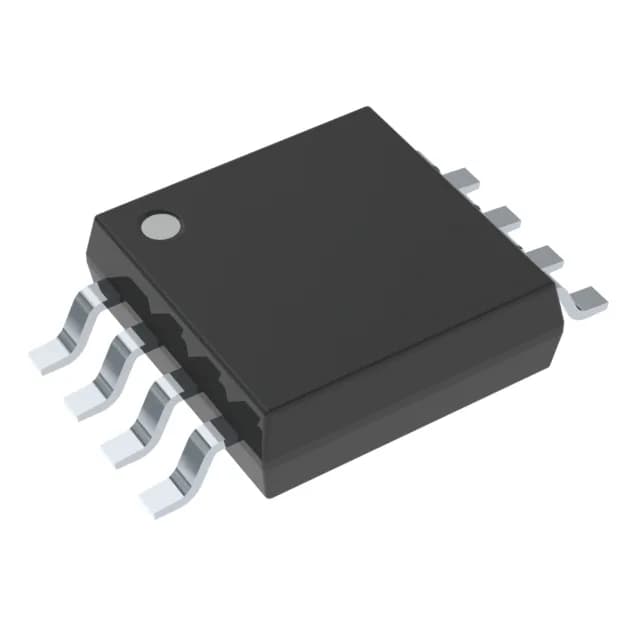
The DS1090U-1+T is offered in an 8-uMAX/uSOP package (3.00 mm width, 8-lead TSSOP/MSOP footprint). The supplier device package is 8-uMAX/uSOP, which is the standard Maxim uMAX body. For PCB layout, the 0.118-inch (3.00 mm) width and 0.0256-inch (0.65 mm) lead pitch are the critical dimensions. The surface-mount package is MSL 3 out of the bag — bake before reflow if the moisture-barrier bag has been open past the floor-life window. No exposed thermal pad, so dissipation is through the leads and the board copper.
Lifecycle and compliance status
The DS1090U-1+T is listed as Active with ROHS3 compliance. The ROHS3 compliance covers the full substance restriction list, which avoids the administrative overhead of managing exemptions.