What the MIL-STD-883 screening buys you
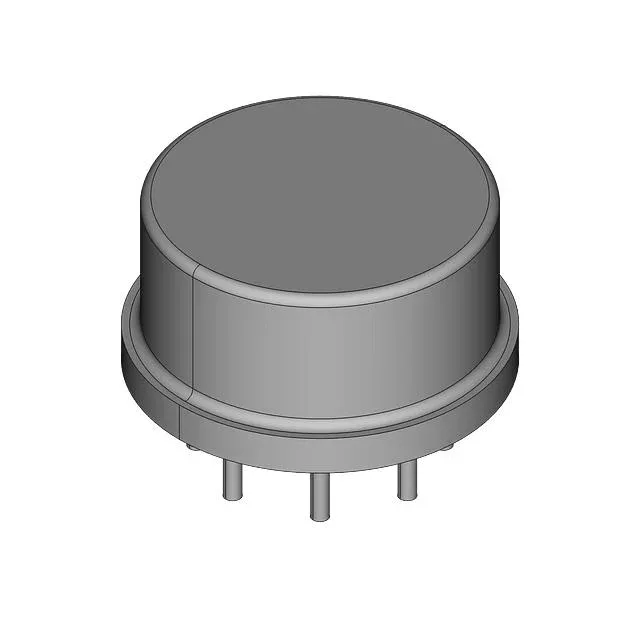
The AMP03BJ/883C is a precision differential amplifier from Analog Devices, built to the Military, MIL-STD-883 specification. This is not a commercial part with a wide temperature grade tacked on — it has been through the full Class B screening flow: temperature cycling, constant acceleration, burn-in, and serialized test data. For a satellite power bus current-sense chain or an avionics servo loop, that screening is what keeps the drift predictable when the junction climbs past 85°C. The 20 µV input offset and 3 MHz -3dB bandwidth are the headline analog specs; the 9.5 V/µs slew rate means it can track a 10 V step in just over a microsecond, fast enough for most closed-loop control paths. Single-circuit in a TO-99-8 metal can, through-hole mount — the hermetic package is the standard for high-reliability environments where outgassing or moisture ingress would kill a plastic SOIC.
Supply span runs from 12 V to 36 V, so it works on standard ±6 V to ±18 V bipolar rails. Quiescent draw is 2.5 mA — low enough that a 78L12 regulator can power it without thermal issues.
Package and mounting — the through-hole reality
The TO-99-8 metal can is an 8-lead round package with a 0.335-inch diameter body. It is through-hole only; no surface-mount version exists in this series. For a new design that must go through a standard reflow line, that means a hand-solder or selective-solder step. The metal case is internally connected to the negative supply pin, so the mounting hole or heatsink pad must be electrically isolated or tied to the negative rail. RoHS non-compliant — the leads are tin-lead, which is exactly what a MIL-STD-883 program wants for tin-whisker mitigation. If your assembly line is lead-free only, this part requires a waiver or a dedicated leaded process.
That said, it is a military-grade device with a long but low-volume production tail.