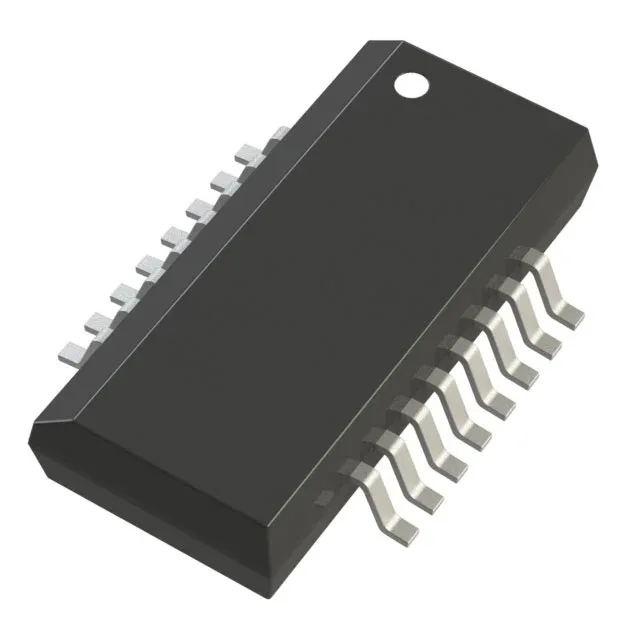
It provides galvanic isolation rated at 1000 Vrms, with all six channels running unidirectional from Side 1 to Side 2 (6/0 input/output count).
25 Mbps data rate and 50 ns propagation delay — timing budget for the bus
The 2 ns typical rise/fall time keeps the signal edges sharp enough for a 20-pin QSOP layout, but the 15 kV/µs common-mode transient immunity ensures the barrier does not glitch when a motor drive or inverter switches at high dV/dt.
No separate VDDIO or level-shifting needed if both sides run at the same voltage. If you need to cross a 3.3 V to 5 V boundary, this part does not do that — all channels are unidirectional and the supply is common to both sides. For bidirectional isolation or mixed-voltage domains, look at the ADUM7643 variant with 3/3 channel split.
No AEC-Q automotive grade is listed, so for under-hood or cabin applications, check the automotive-rated iCoupler variants separately.