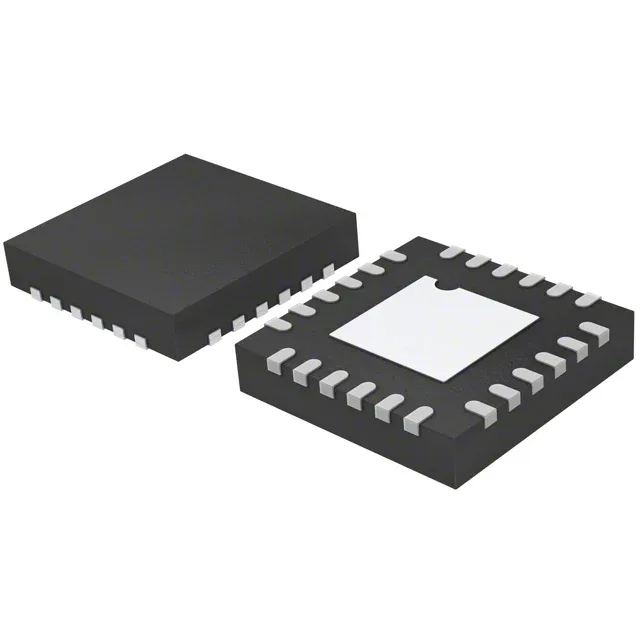
What this I²C keypad controller does on the board
It sits between a matrix of switches or GPIO signals and a host processor, offloading the scanning and debounce overhead. The supply range of 1.65V to 3.6V lets it bridge 1.8V and 3.3V logic domains without a level shifter — useful when the MCU runs at 1.8V but the keypad backlight or external sensors need 3.3V.
Package and rework — the 24-LFCSP exposed pad
This part comes in a 24-LFCSP-WQ measuring 3.5x3.5 mm with an exposed pad underneath. That pad is the thermal and electrical ground connection — it needs a via-in-pad or a thermal land pattern on the PCB to sink heat and keep the device stable during reflow. The exposed pad is also the only way to get a solid ground return for the I²C signals; a floating pad can cause erratic bus behavior. For rework, the small body and fine pitch mean a hot-air station with a nozzle smaller than 4 mm is the tool to use. Pre-bake at 125°C for 8 hours if the moisture-barrier bag has been open longer than the floor life — the LFCSP package is MSL 3 and can pop if reflowed wet.