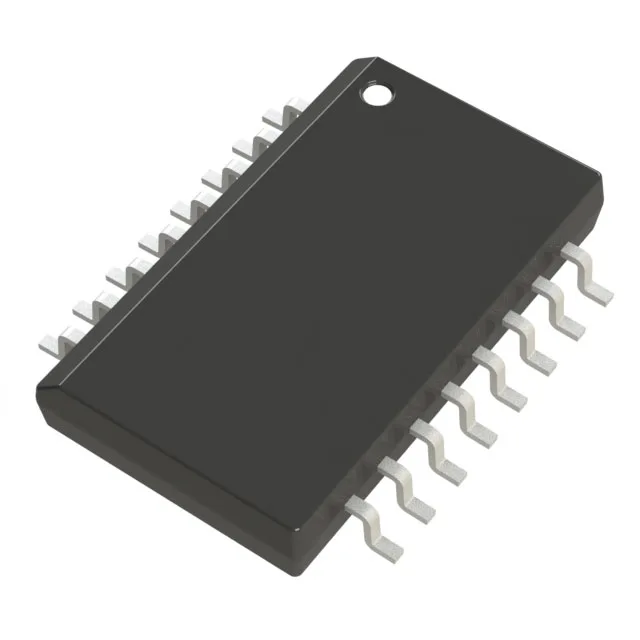
5000 Vrms isolation with integrated power — one chip replaces three
It integrates both signal isolation via magnetic coupling and an isolated DC-DC converter on-chip, so a single 16-SOIC package handles what normally takes a transceiver plus a separate isolated power module. The 5000 Vrms isolation rating covers industrial motor drives, medical equipment, and utility-grid interfaces where galvanic separation is a safety or noise requirement. Three unidirectional channels are configured as two drivers on one side and one receiver on the other, matching the typical RS-485 half-duplex node topology. Data rate reaches 16 Mbps, which supports Profibus and other fieldbus variants running at 12 Mbps without margin concerns.
16 Mbps and 25 kV/µs CMTI — what the timing numbers mean
Propagation delay is 100 ns max in both directions, and rise/fall times are 15 ns typical. At 16 Mbps the bit period is 62.5 ns, so the 100 ns delay consumes about 1.6 bit-times of latency — fine for most polled or token-passing networks, but worth checking if the protocol uses tight turnaround timing. The 25 kV/µs common-mode transient immunity means the receiver won't glitch when a motor drive or relay bank slams several kilovolts of common-mode noise across the isolation barrier in a microsecond. The integrated isoPower converter generates the isolated-side rail from the input supply, eliminating the external transformer and rectifier.
For new designs this means no forced redesign cycle from obsolescence, and for production the supply channel is the standard distribution network, not the spot market.