It reports both readings over an SMBus interface and asserts an alarm output when either temperature exceeds a programmed limit. The part is built around an internal ADC, comparator, multiplexer, and register bank — it handles the conversion and decision logic without needing a host microcontroller to poll continuously. The supply range spans 3V to 5.5V, so it can sit on a 3.3V or 5V rail without an extra regulator. The operating temperature range is 0°C to 100°C, and the external sensor is specified over the same 0°C to 100°C window — typical for equipment that runs inside a conditioned enclosure: server racks, telecom line cards, base stations, and industrial controllers where the board ambient stays below 100°C.
Accuracy split — local vs remote
The local sensor is rated at ±1°C, which is tight enough for most board-level thermal monitoring — you can trust it to trigger a fan ramp or throttle a processor before the junction hits its critical limit. The remote channel is specified at ±5°C. That wider tolerance means the remote reading is more of a coarse over-temperature flag than a precision measurement. If the application needs better than ±5°C from the external diode, the ADM1023ARQ-REEL sibling tightens remote accuracy to ±3°C and extends the remote sensing range to 120°C.
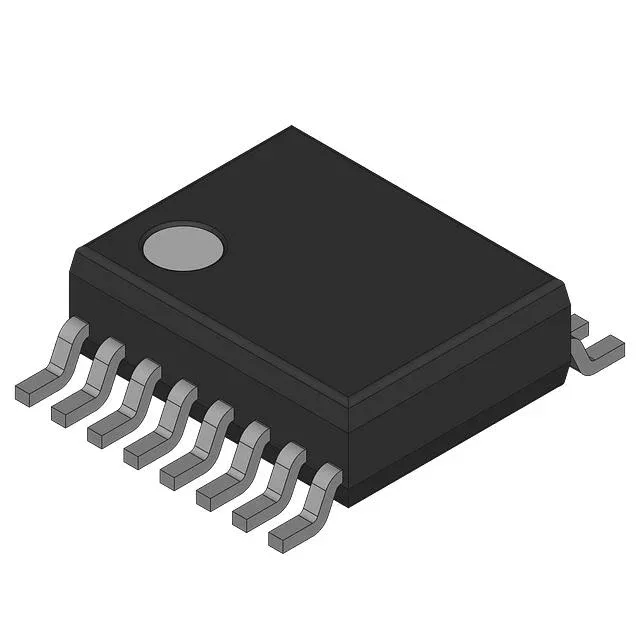
The device is supplied in a 16-lead SSOP (0.154-inch body width, 3.90 mm) and also listed with a 16-QSOP supplier device package. The two codes refer to the same physical footprint — SSOP and QSOP are interchangeable in this case — but confirm the exact package marking on your incoming inspection if the board was laid out for one variant. Mounting is surface-mount only.
The part is RoHS non-compliant per the listing, so verify your assembly's exemption status if you need lead-free processing.