It delivers a 1 MHz -3 dB bandwidth and 0.5 V/µs slew rate, with a supply span from 10 V to 44 V — wide enough to run off unregulated industrial rails or a 24 V battery bank without a separate regulator. The 2.2 mA supply current and 25 mA output drive per channel suit it for signal conditioning, buffer stages, and low-speed control loops in benchtop instruments, test equipment, and temperature-controlled industrial panels.
At 0.5 V/µs, this op-amp will reproduce a 10 V peak-to-peak sine wave cleanly up to about 16 kHz before slew-rate limiting distorts the waveform. That is fine for audio-frequency filtering, transducer amplification, or slow servo loops — but it will not handle fast pulse trains or video-rate signals. The 1 MHz gain-bandwidth product means closed-loop gain of 10 gives you roughly 100 kHz of usable bandwidth; plan your feedback network accordingly.
Supply voltage range — 10 V to 44 V
The 10 V minimum supply means a single 12 V or 15 V rail works, and the 44 V maximum lets you run it from a 24 V industrial supply with headroom for transients. No need for a separate low-dropout regulator in many cases, which simplifies the BOM. Input offset voltage is 1 mV typical, input bias current 40 nA — adequate for non-critical DC accuracy.
Package and temperature — rework and environment
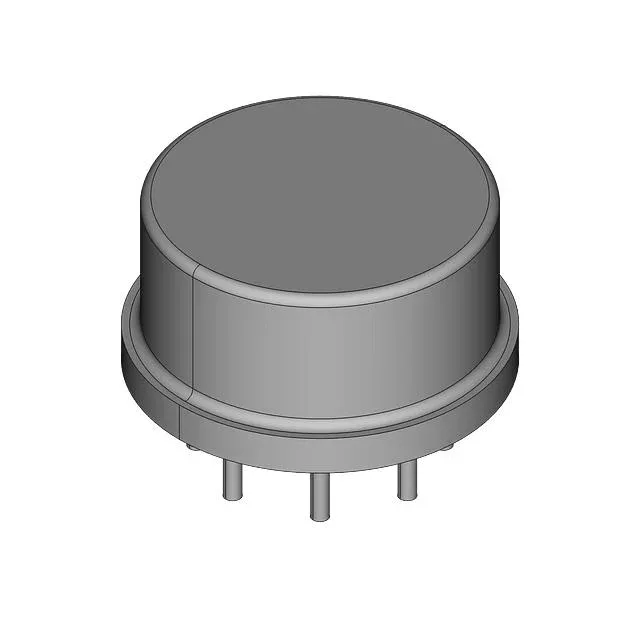
The TO-99-8 metal can is a through-hole package with a round footprint and 8 leads on a 200-mil diameter circle. It is hermetic and survives hot-air rework well — you can lift and replace it without damaging the board, provided you have a desoldering tool that clears the plated-through holes.
Note that it is RoHS non-compliant (the TO-99 can uses lead-based solder inside the seal), so it cannot be used in new builds requiring RoHS exemption-free compliance. For legacy or military/aerospace maintenance where leaded parts are accepted, it remains a straightforward source.