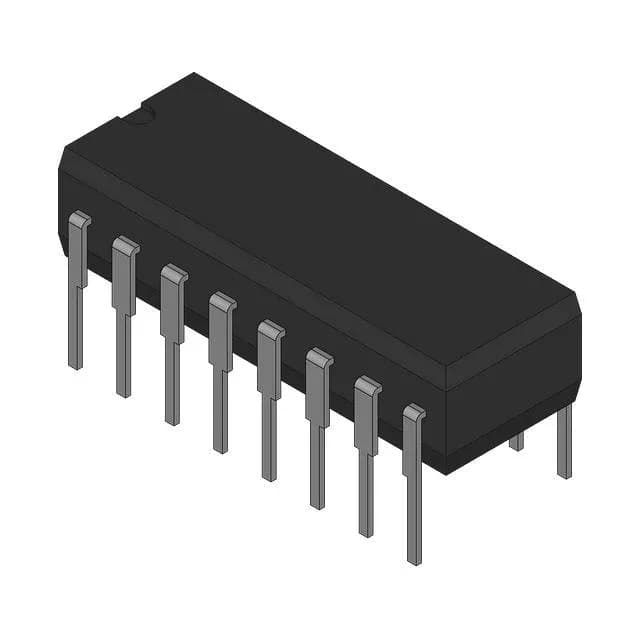
Precision instrumentation amplifier in a hermetic ceramic DIP
Its 25 MHz gain-bandwidth product and 5 V/µs slew rate support clean amplification of signals up to several tens of kilohertz, while the 200 µV input offset keeps DC errors manageable without external trimming for many industrial-sensor applications. Housed in a 16-pin ceramic DIP (0.300" body, 7.62 mm row spacing), the package is hermetic and suited for environments where moisture or outgassing would degrade a plastic-molded part. The through-hole mounting simplifies prototyping and rework, though the ceramic body is more brittle than epoxy — handle with care during insertion. Operating temperature spans -25°C to 85°C, covering most industrial and telecom enclosures but not full automotive under-hood or extended military range. Supply range is 12 V to 36 V single or split, giving flexibility for ±6 V to ±18 V rails common in analog front-end designs.
Sourcing and lifecycle — still active, but watch the RoHS status
Procurement can commit this to a BOM without stockpiling for obsolescence. One important compliance flag: this part is RoHS non-compliant. The lead-bearing solder finish on the ceramic DIP means it cannot be used in EU RoHS-regulated products without an exemption. If your assembly line is RoHS-only, you will need to either apply for an exemption or evaluate a compatible alternative.
Package and handling — ceramic DIP, bulk shipment
For high-volume pick-and-place, you will need to transfer to tube feeders or hand-place. The ceramic package is MSL 1 (no moisture sensitivity), so no baking is required before reflow or hand-soldering — store the reels dry is not a concern here. Pin count is 16, standard 0.300" wide DIP footprint. The ceramic body dissipates heat less efficiently than a plastic DIP with a copper leadframe, so keep the supply current (3.5 mA typical) and output drive within the datasheet limits to avoid junction temperature rise above the 85°C ceiling.