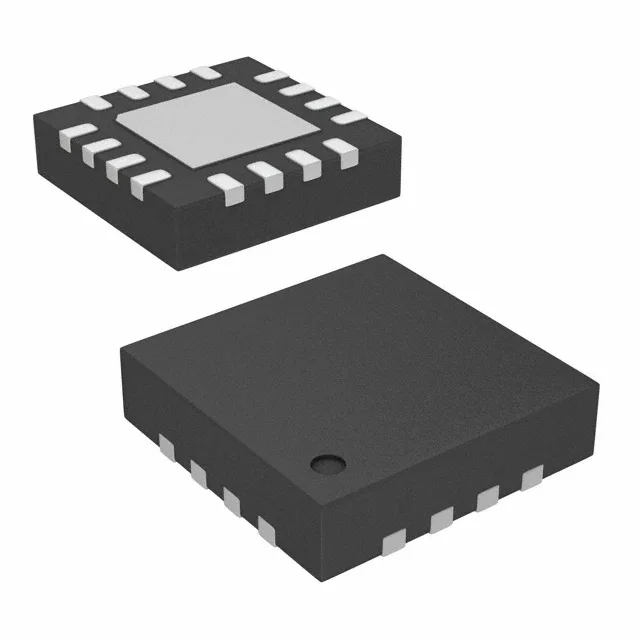
Analog Devices AD5689BCPZ-RL7 — Logic ICs

AD5689BCPZ-RL7 nanoDAC+ 16-bit DAC, 8 µs settling, SPI

MPNAD5689BCPZ-RL7
End of Life

Analog Devices AD5689BCPZ-RL7, nanoDAC+® series, 16-bit dual voltage-output DAC, String DAC architecture, 8 µs settling, ±1 LSB INL/DNL, SPI/DSP interface, 2.7 V to 5.5 V analog supply, 1.8 V to 5.5 V digital supply, -40°C to 105°C, 16-LFCSP (3x3) package, Tape & Reel.

$11.26Ref. price · indicative, final on quote
Packaging16-WFQFN Exposed Pad, CSP
StockContact for availability
MOQ1 pcs
  • 100% new & originalTraceable channels only — no refurbs, no pulls, no remarked parts.
  • Date & lot codes on quoteStated per line before you commit; label photos on request.
  • MSL-compliant ESD packingMoisture-sealed bags with indicator cards; reels photo-verified.
  • PayPal buyer protectionPay by T/T, PayPal or Payoneer — card payments covered end to end.

Specifications

AD5689BCPZ-RL7 Technical Specifications
ParameterValue
SeriesnanoDAC+®
Output typeVoltage - Buffered
Mounting typeSurface Mount
Reference typeExternal
Voltage - supply, analog2.7V ~ 5.5V
Voltage - supply, digital1.8V ~ 5.5V
InterfaceSPI, DSP
Operating temperature-40°C ~ 105°C
PackageTape & Reel (TR); Cut Tape (CT)
ArchitectureString DAC
INL (DNL)±1, ±1 (Max)
Settling time8µs
Number of bits16
Case16-WFQFN Exposed Pad, CSP
Differential outputNo
Number of d (A converters)2

Product details

Package and mounting

The AD5689BCPZ-RL7 is a 16-bit, dual-channel, voltage-output DAC from Analog Devices' nanoDAC+® family, built around a String DAC architecture that guarantees monotonicity. Its ±1 LSB max INL and DNL means every code step lands within one LSB of the ideal transfer function — no missing codes, no differential nonlinearity that would glitch a control loop. The 8 µs settling time to ±1 LSB on a full-scale step sets the update-rate ceiling: at 125 kSPS per channel you get a clean settled output before the next conversion, which suits servo setpoint updates, programmable voltage references, or waveform generation in the audio band.

Supply rails and interface — where it fits the BOM

That split-rail flexibility lets you run the DAC core from a clean 5 V analog rail while the digital interface talks directly to a 3.3 V or 1.8 V MCU without a level shifter. The SPI/DSP-compatible serial interface accepts clock rates up to 50 MHz (per the family datasheet), so the throughput bottleneck is the DAC settling, not the bus. An external reference is required — the reference input range tracks the analog supply, so a 2.5 V or 4.096 V reference like the ADR4525 or ADR4540 is a natural pairing for a 0-to-Vref output swing.

Lifecycle and sourcing

For dual-sourcing flexibility, the pin-compatible AD5689RARUZ-RL7 adds an integrated 2.5 V reference (2 ppm/°C typical) and slightly relaxed INL of ±2 LSB max — a trade worth evaluating if you want to eliminate the external reference BOM line.

Frequently asked questions

What are the alternatives to AD5689BCPZ-RL7?

The closest functional alternative is the AD5689RARUZ-RL7, which adds an integrated 2.5 V reference but has a slightly wider INL spec of ±2 LSB max. The AD5686RBCPZ-RL7 offers four DAC channels in the same package and linearity. Both are pin-compatible in the same LFCSP footprint.

Does AD5689BCPZ-RL7 require an external reference?

Yes, the reference type is External. You must supply a precision voltage reference — typical choices are 2.5 V or 4.096 V references such as the ADR4525 or ADR4540 series.

Is AD5689BCPZ-RL7 compatible with 3.3 V SPI?

Yes. The serial interface is SPI/DSP-compatible.